What Rising Interest Rates Mean for Your Home-Buying Power
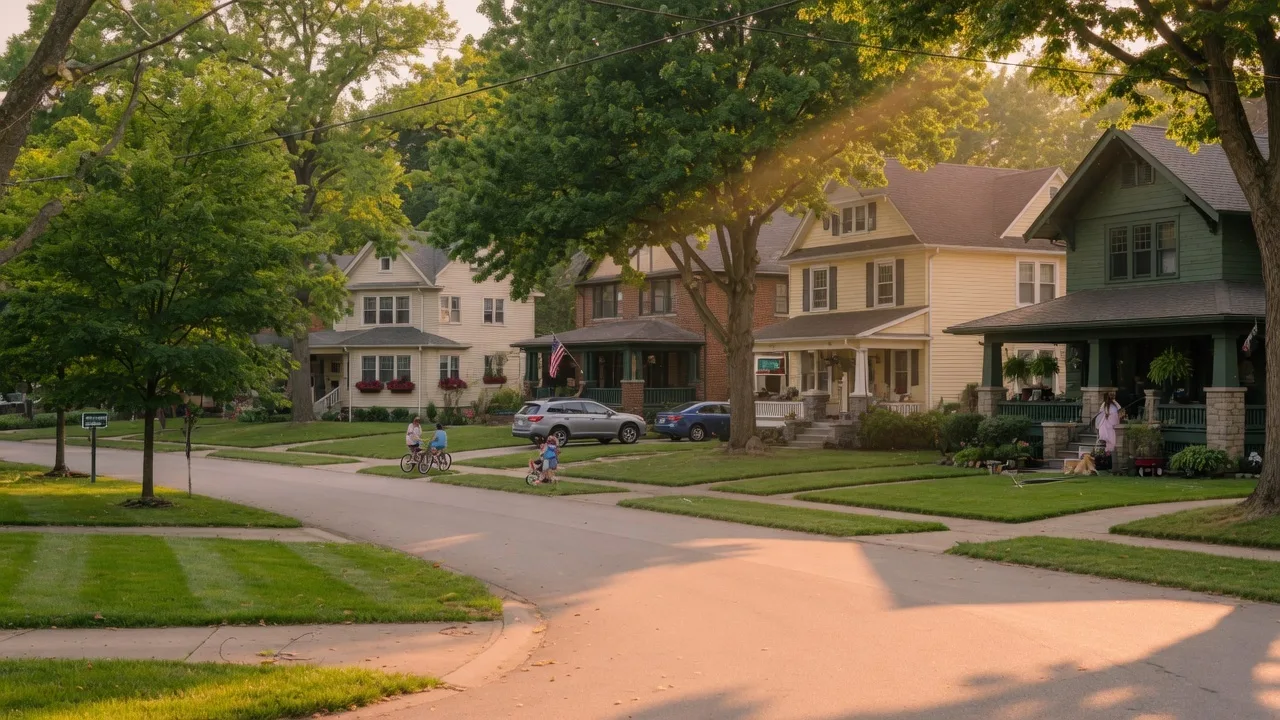
If you've been thinking about buying a home in Hamilton County or Boone County, here's something you need to know right now: mortgage rates are at approximately 6.7% for a 30-year fixed loan, and the Federal Reserve's latest projections signal that rates could climb further before the end of 2026. For anyone trying to decide whether to act now or wait, this is the most important piece of the puzzle — because when rates move even a fraction of a point, your purchasing power shifts with them.
The Numbers: How Much Does a Rate Change Actually Cost You?
Let me break this down in real dollars, because the percentages alone don't tell the full story. Say you're looking at a home in Fishers or Carmel at $500,000 — right around the current median in Hamilton County. With a 20% down payment, you're financing $400,000.
- At 6.5%, your principal and interest payment is roughly $2,528/month.
- At 7.0%, that same loan costs about $2,661/month — an extra $133 every month.
- At 7.5%, it jumps to $2,797/month — that's $269 more per month, or over $3,200 per year, compared to 6.5%.
Over a 30-year mortgage, that half-point difference between 6.5% and 7.0% adds up to nearly $48,000 in additional interest. That's not a rounding error — that's a kitchen renovation, a college fund contribution, or a decade of property tax payments in Noblesville or Westfield.
The same math works in reverse for your buying power. If your budget is fixed at $2,800/month for principal and interest, here's what a rate increase does to the maximum home price you can afford:
- At 6.5%, you can finance approximately $417,000.
- At 7.0%, that drops to about $397,000 — a $20,000 reduction in what you can spend.
In a market where the median home price in Hamilton County hovers around $500,000, and homes in Carmel regularly list above $600,000, losing $20,000 in purchasing power can mean the difference between qualifying for the home you want and falling short.
What the Fed Is Signaling for the Rest of 2026
At its June 2026 meeting, the Federal Reserve held the federal funds rate steady at 3.5%–3.75%, but the updated projections — the so-called "dot plot" — shifted noticeably hawkish. The median estimate for the year-end federal funds rate rose to 3.8%, up from 3.4% just three months ago. Bank of America is forecasting as much as 75 basis points of rate hikes through the rest of the year, driven by a resilient labor market and sticky inflation.
What does this mean in plain English? The mortgage rate you can lock in today may not be available in September or October. If you've been waiting for rates to drop, the data right now suggests they're more likely to drift upward in the near term.
What This Means for Buyers in Hamilton County and Boone County
I know rising rates can feel discouraging. Nobody wants to feel like they're paying more than they need to. But here's what I tell my clients: the best time to buy is when you've found the right home and you can comfortably afford the payment — not when some perfect rate appears on the horizon.
Here's why: you're not marrying the rate, you're marrying the house. Rates will fluctuate for the entire life of your loan. What stays constant is the home you chose, the community you're part of, and the equity you build over time. In Hamilton County, where property values have consistently appreciated year over year, buying at 6.7% in a market with strong fundamentals often beats waiting for a rate that may or may not materialize.
There's also a strategic advantage to acting now while inventory is still tight — around 1.1 months of supply across the county. When rates eventually do drop, buyer demand typically surges, and you'll find yourself competing in an even more crowded field. Locking in a home at today's competition level and refinancing later if rates improve is a strategy that's worked well for many of my clients.
What This Means for Sellers
If you're considering selling your home in Fishers, Carmel, Noblesville, Westfield, Zionsville, or Whitestown, rising rates actually work in your favor in one important way: they keep new listings scarce. Homeowners who locked in rates at 4% or 5% over the past few years are reluctant to sell and give up those rates, which constrains supply and keeps competition among buyers strong.
But rising rates do affect your buyer pool. As monthly payments increase, some buyers get priced out or decide to wait — which means the window of maximum buyer activity is right now, while rates are still in the mid-to-upper 6% range rather than the 7%+ territory the projections suggest could be coming.
Pricing your home correctly from day one is critical in this environment. Overpricing by even 3–5% can push you into a different buyer bracket entirely, especially when buyers are stretching to meet their monthly budgets. This is where data-informed pricing — the kind I deliver as an AI Certified Agent™ using advanced market analysis tools — makes a measurable difference in your final sale price.
A Practical Strategy: Lock, Shop, and Protect Yourself
If you're a buyer and you're serious about finding a home in the next few months, here's the approach I recommend:
- Get pre-approved now. A full underwriting approval (not just a pre-qualification letter) tells sellers you're serious and gives you a rate to work with. Many lenders offer rate lock periods of 60 to 90 days, which gives you a solid window to shop.
- Understand your rate lock options. Ask your lender about float-down provisions, which allow you to lock in today's rate but take advantage if rates drop before closing. Some lenders offer this as a standard feature — others charge a small premium.
- Run the numbers on a buydown. In some cases, a temporary 2-1 buydown (where your rate is reduced by 2% in year one and 1% in year two) can make the monthly payment much more manageable while you settle in. This is especially helpful for buyers who expect their income to increase or who plan to refinance within two to three years.
- Factor in refinancing later. Buying a home at 6.7% with the intention of refinancing at 5.5% or 6.0% in a year or two is a perfectly sound strategy — especially in a market where home values in Hamilton County continue to appreciate. You build equity now and reduce your payment later.
The Bottom Line
Interest rates are one piece of a much larger picture. They matter — and I'll never minimize that — but they don't have to be the reason you put your plans on hold. Whether you're a buyer trying to figure out the best timing or a seller wondering how rates affect your sale, the key is having an agent who understands both the numbers and the strategy behind them.
With over 25 years of experience in Hamilton County and Boone County, a CREN credential in negotiation, and the analytical edge of being the only AI Certified Agent™ in the Indianapolis area, I help my clients make decisions based on data, not headlines. If you want to talk through what the current rate environment means for your specific situation — whether you're looking at a $400,000 ranch in Westfield or a $700,000 home in Carmel — I'm happy to walk you through it.
Let's Talk Strategy
Whether rates go up or down, the right strategy makes all the difference. Reach out for a no-pressure conversation about your goals, your budget, and the smartest path forward in today's market.